Years ago, during my post-doctoral studies, I worked on projects involving plant-derived amphetamine analogs from Ma Huang (Ephedra sinica) and khat (Catha edulis). This work entailed travel to Newe-Ya’ar Research Centre in Israel during the summer of 2011, hosted by Dr. Efraim Lewinsohn and his team.
We were introduced to khat (Catha edulis), which is a commonly cultivated shrub in East Africa and the Middle East. However, khat remains relatively unknown in other parts of the world, where it is often controlled or illicit. Chewing fresh khat leaves as part of hours-long social gatherings, business meetings, and political discussions is a centuries-old custom, particularly among men. Khat contains the mild stimulant cathinone, which is chemically similar to pseudoephedrine (decongestant) and amphetamines. It promotes alertness in a comparable manner to coffee. While khat is considered a mild stimulant, it can contribute to insomnia, restlessness, and psychological (or mild physical) dependence.

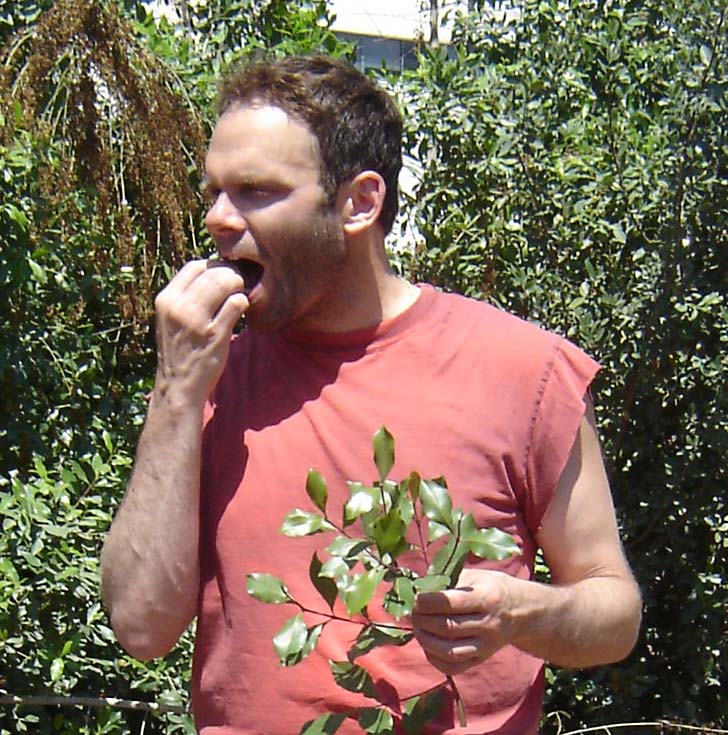
I had the opportunity to ‘try’ khat while in Israel…I chewed through many young leaves over the course of hours and found myself alert and mildly euphoric. It certainly helped me pay attention during our scientific discussions! It also informed me regarding the arguably extreme treatment this plant receives in some countries. It’s definitely not cocaine.
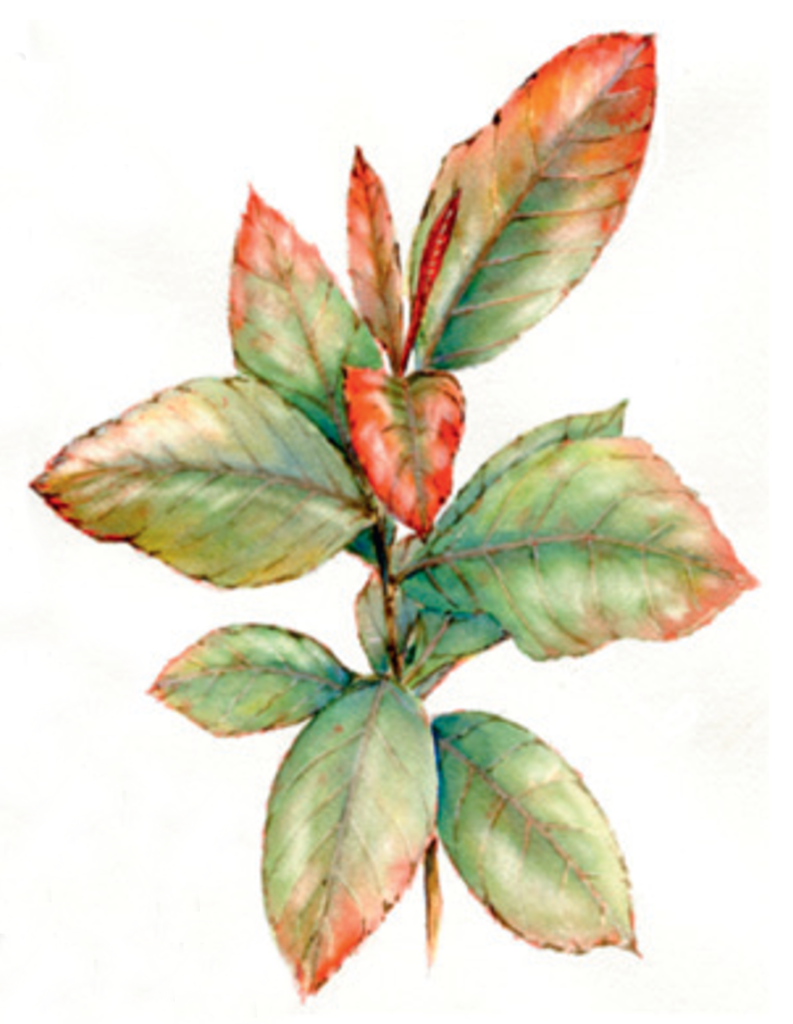
A young khat shoot I sketched with watercolours helped illustrate our 2012 publication on plant-based amphetamine analogs, found here:
https://doi-org.ezproxy.lib.ucalgary.ca/10.1016/j.tplants.2012.03.004