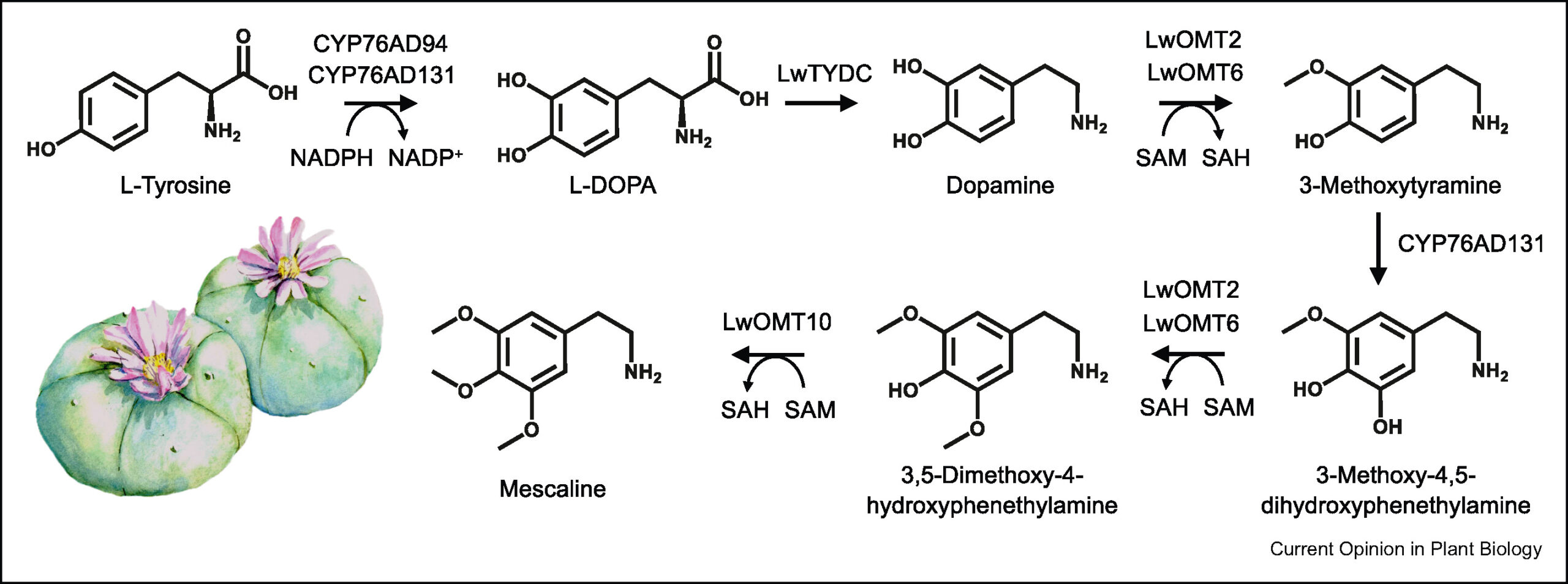
Botanical rendering of peyote buttons (Watercolour on paper) to illustrate the plant’s biosynthesis of mescaline. Published in Current Opinion in Plant Biology Vol. 82: 102626 (2024) https://doi.org/10.1016/j.pbi.2024.102626. Open access, used with permission.
Peyote (Lophophora williamsii) is an entheogenic and medicinal cactus native to the Chihuahuan desert of Mexico and Southwestern United States. The psychoactive and hallucinogenic properties of peyote are principally attributed to the phytochemical mescaline. Archeological evidence supports indigenous use of peyote dating back at least 5,500 years. Whole cacti ‘buttons’ are still used today for ceremonial, spiritual, and folk medicine purposes. Beyond traditional significance, scientific research has revealed promise for mescaline and other psychedelics in the treatment of Major Depressive Disorder (MDD) and other psychiatric conditions.